
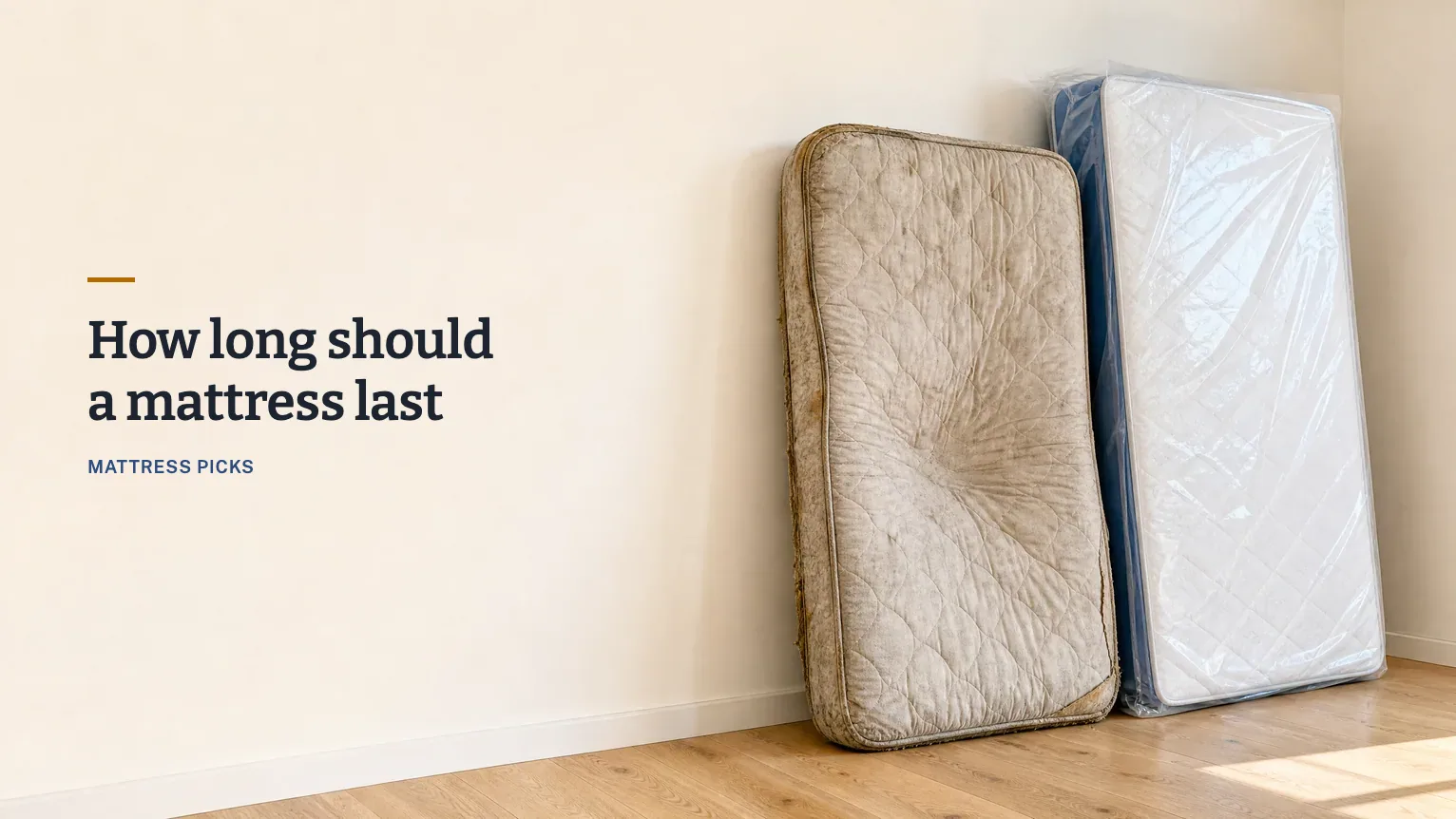
Its condition tells you more than its age. This guide covers the signs of wear, when a sag counts as a fault under the makers' warranties, and how to make a mattress last.
Contents
- How long do mattresses actually last
- How to spot a mattress that is wearing out
- When a sag counts as a fault
- What a mattress warranty covers
- How to make a mattress last longer
- When to replace a mattress that still looks fine
- Frequently asked questions
- Does a 10-year warranty mean the mattress lasts 10 years?
- How much should you spend on a good mattress?
- How often should you turn or rotate a mattress?
- Does a mattress topper make an old mattress last longer?
- Can an old mattress affect your health?
- What should you do with the mattress you are replacing?
- What to do next
- How we researched this
How long do mattresses actually last
CHOICE's mattress expert puts the average for a good mattress at about eight years, and says it depends on the quality of its build and materials.[1] CHOICE tests comfort when a mattress is new and again after eight years of simulated use, passing a roller over it 30,000 times.[1]
Treat eight years as a guide, not a deadline. A mattress in a spare room works far less than the one you sleep on every night, and one that is rotated and properly supported wears more evenly.
How to spot a mattress that is wearing out
Any one of these signs can have another cause. When several appear together, the mattress is usually the problem.
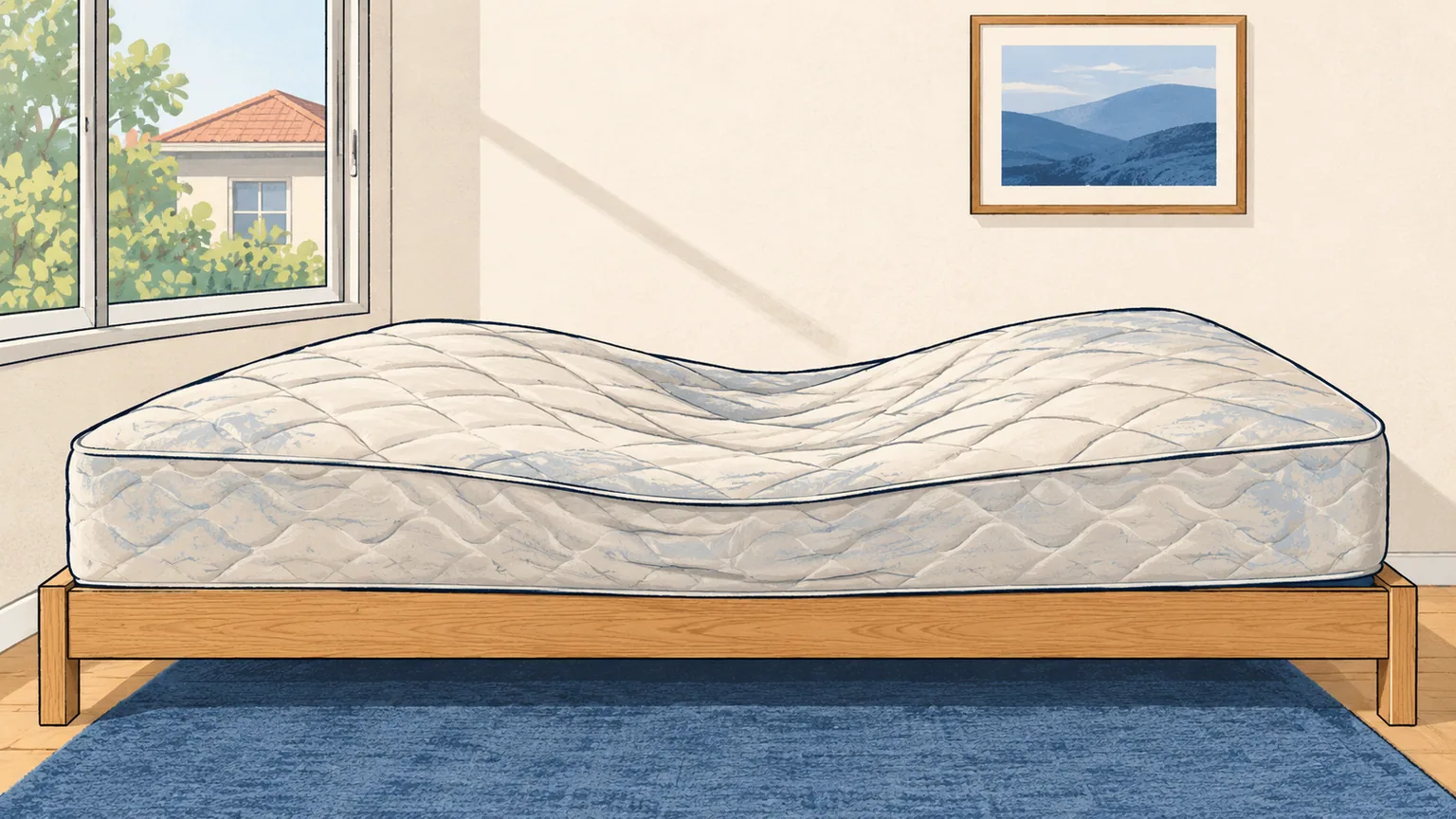
- Dips, sags or lumps. If the surface no longer recovers, the layers have compressed for good. Check the edges as well as the middle.
- Waking stiff or sore. If the discomfort is ongoing, CHOICE's expert advises checking with your doctor first, because it may be a health issue rather than the mattress.[1]
- Tossing and turning. Shifting all night to find a comfortable spot points to uneven support.
- New noises. Squeaks and creaks usually come from worn springs or a loose base.
- Allergies that flare at night. Old mattresses can collect dust mites, bacteria, mould and other allergens.[1]
- Stains, tears or springs you can feel. Damage weakens the mattress and can affect a warranty claim.
If you sleep better in another bed, take that as a strong signal.
When a sag counts as a fault
Every mattress softens with use.[3][4] The makers we read draw a line between that softening and a fault, and the line is a measured dip.
- Ecosa covers a visible indentation greater than 20 mm, as long as it did not come from an improper or unsupportive base.[2]
- Emma covers a permanent sag or dip greater than 2.5 cm and visible to the naked eye, but not standard softening after extensive use.[3]
- Origin covers visible indentations greater than one inch (2.54 cm) from flaws in manufacturing, but not a normal increase in softness.[4]
- Mlily excludes normal body indentation of less than 30 mm, and excludes timber slats more than 7 cm apart.[5]
To check yours, strip the bed, lay a straight edge such as a long ruler across the dip, and measure the deepest gap. Take photos as you go: Ecosa asks for photos of a sag with any claim.[2]
What a mattress warranty covers
The chart counts the warranties stated on the makers' own pages. Ten years is the most common warranty among the mattresses we list.
Warranties of the mattresses we list
A long warranty is not a promise of comfort. Each one covers manufacturing faults under its own conditions, such as a proper base and normal home use.[2][4][5] Emma and Origin both say that a mattress which simply feels softer is not a fault.[3][4]
Before you buy, check three things: the depth of sag that counts as a fault, the base the maker expects, and how to make a claim.
How to make a mattress last longer
Care slows wear; it cannot undo it. These habits help a mattress age evenly.
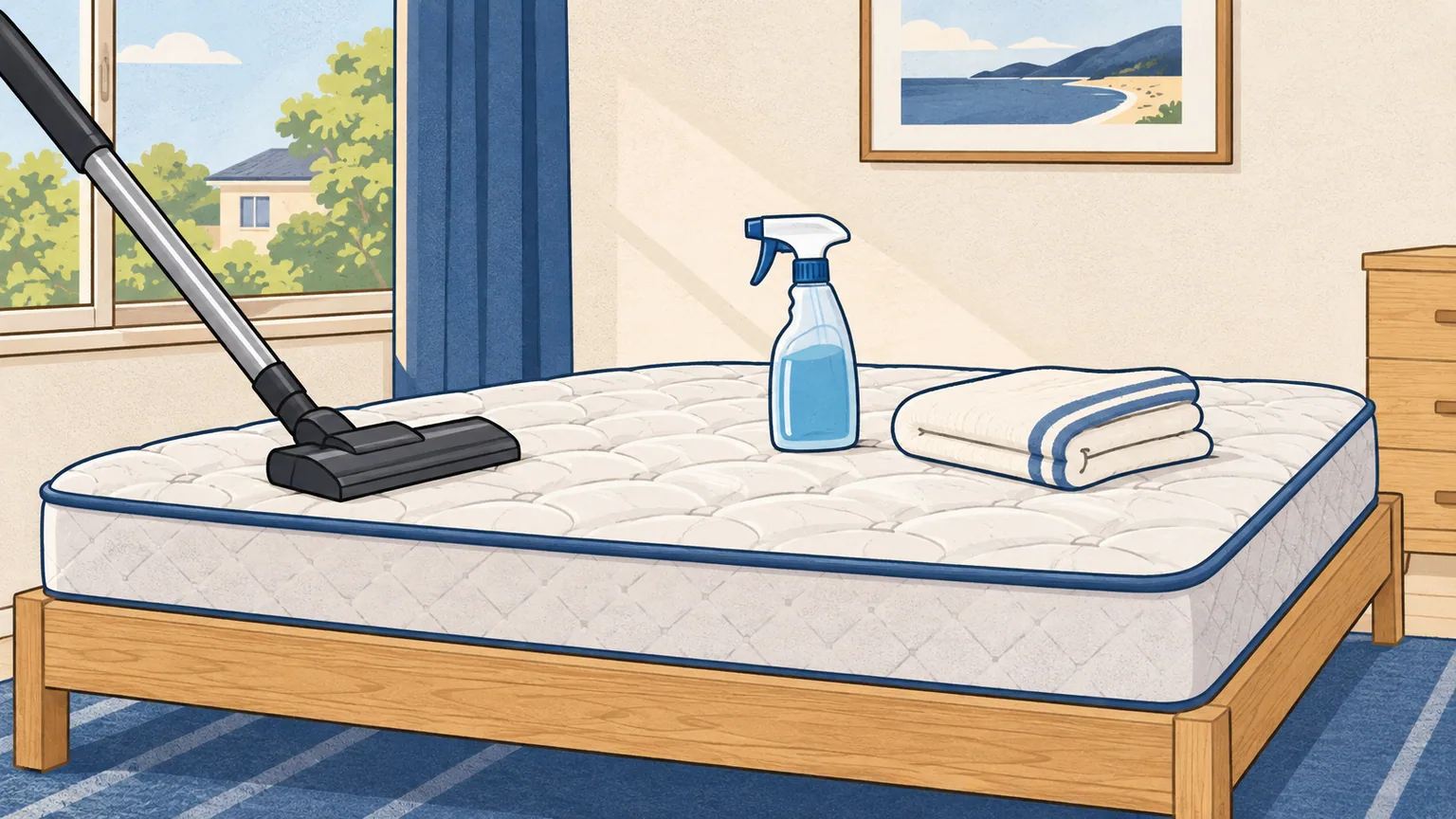
- Use a protector. Mlily advises always using a mattress protector to avoid accidental soiling.[5]
- Rotate it head to foot. Makers differ on how often. Eva suggests every few months.[7] Mlily's product page says every three months, then every six months after the first year,[6] while its warranty page says once a month for the first year, then every three months.[5] Follow the instructions that come with your mattress.
- Keep the base sound. Replace slats that bow or sit too far apart.
- Let it breathe. Air the bed before making it, and deal with spills quickly.
When to replace a mattress that still looks fine
Your needs can change while the mattress does not. A change in weight, an injury, a pregnancy, a new partner or a new sleep position can make a sound mattress the wrong one.
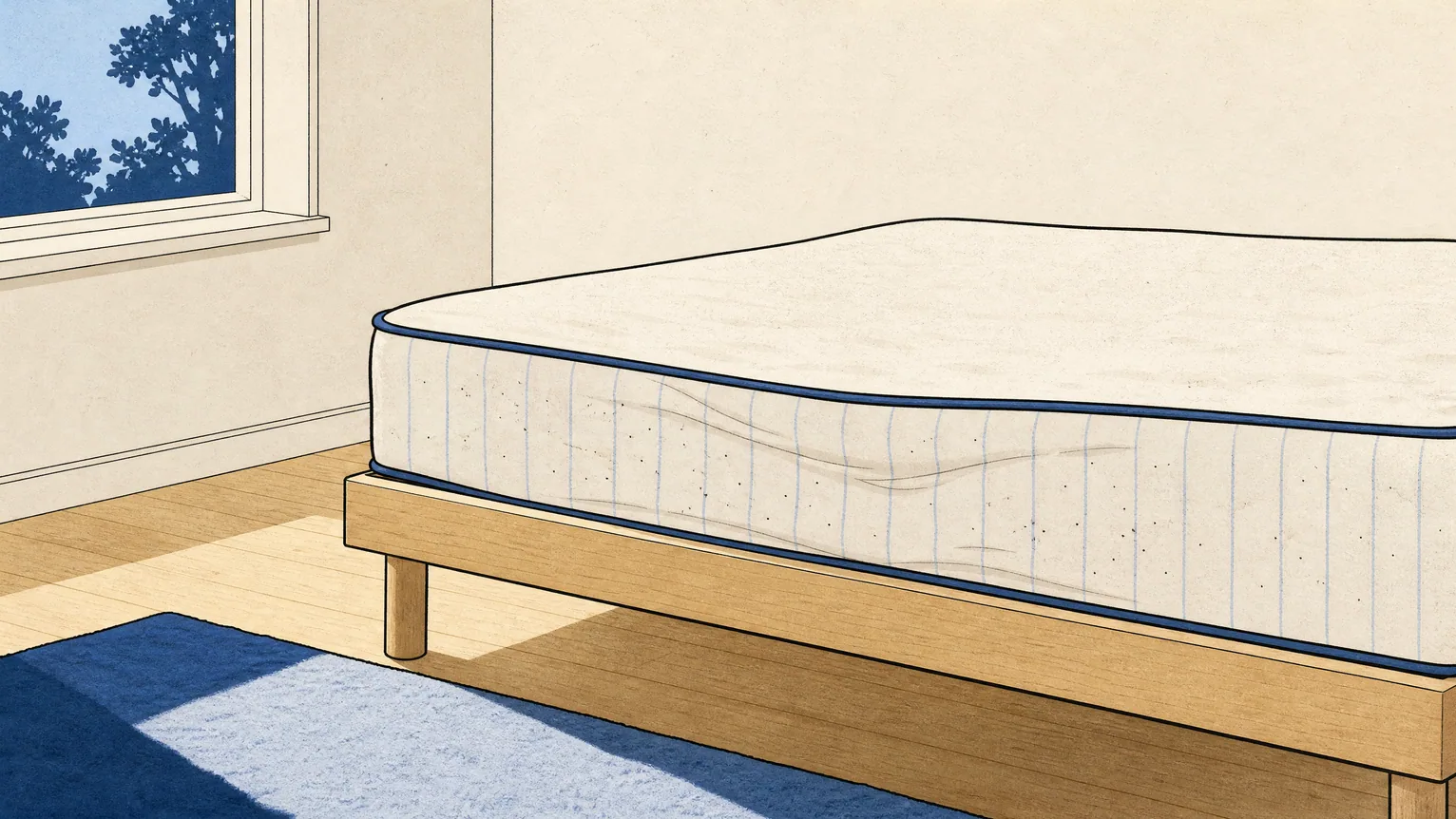
If your sleep has slipped and nothing else has changed, the mattress is a fair suspect, even without a visible dip.
Frequently asked questions
Does a 10-year warranty mean the mattress lasts 10 years?
No. A warranty covers manufacturing faults, such as a sag deeper than the maker's limit, under conditions like a proper base. Gradual softening is normal wear, and Emma and Origin both exclude it.[3][4]
How much should you spend on a good mattress?
No price guarantees a longer life. Look at what the money buys: the materials, the warranty length and its conditions. A mattress that suits you and lasts can cost less per year of use than a cheaper one replaced early.
How often should you turn or rotate a mattress?
As often as your maker says, because schedules differ: Eva suggests every few months, and Mlily every one to three months in the first year.[5][6][7] Rotate a one-sided mattress; only flip one that is double-sided.[5]
Does a mattress topper make an old mattress last longer?
A topper can restore some surface comfort, but it cannot fix a tired support core. It masks wear rather than reversing it, so treat it as a stopgap.
Can an old mattress affect your health?
It can affect allergies: old mattresses can collect dust mites, bacteria, mould and other allergens.[1] For ongoing aches, CHOICE's expert suggests checking with your doctor first, because the cause may not be the mattress.[1]
What should you do with the mattress you are replacing?
Check with your council first: CHOICE reports that most councils allow at least one free kerbside hard rubbish pickup a year, and that tips which charge ask about $12 to $80 a mattress.[8]
Recycling is more limited. Some makers offer it: Ecosa lists recycling your old mattress at $125.[9] The Salvos and Vinnies have told CHOICE they can accept mattresses that are not stained, so call ahead.[8]
What to do next
When your mattress shows its age, compare the warranties and trials of the models we list.
Read next:
- How to protect your mattress: the care that slows wear.
- How to choose the right firmness: for when your needs have changed.
How we researched this
We do not test products. This guide was written from the pages below, read on the dates shown, and from the warranty terms on the makers' pages for the mattresses we list; the number after a sentence points to its source.
- CHOICE: 5 signs it's time for a new mattress (last updated 12 June 2024), read on 13 November 2026
- Ecosa warranty, read on 13 November 2026
- Emma 10-year warranty, read on 13 November 2026
- Origin FAQ: warranty, read on 13 November 2026
- Mlily warranty and care, read on 13 November 2026
- Mlily SereneLux 5 Zone Hybrid product page, read on 10 November 2026
- Eva Comfort Classic Mattress product page, read on 10 November 2026
- CHOICE: How to dispose of your mattress and pillow (last updated 12 June 2024), read on 13 November 2026
- Ecosa CoolComfort Mattress product page, read on 5 November 2026