
This guide covers why that matters, which protector suits you, how to fit and wash it, how to clean the mattress cover itself, and what to do when something spills.
Contents
- Why a protector protects your warranty
- When a trial needs a protector
- Do you really need a mattress protector
- How to choose the right mattress protector
- Waterproof protectors
- Quilted cotton protectors
- Fully encased protectors
- How to fit a mattress protector and stop it sliding
- How to wash a mattress protector
- How to clean the mattress cover
- Spills, stains and storage
- What to do when something spills
- Why mattresses get yellow stains
- Protecting a mattress in storage
- Everyday habits that help a mattress last longer
- Frequently asked questions
- Does a stain void my mattress warranty?
- Is a mattress ruined if it gets wet?
- How often should I wash my mattress protector?
- Can I wash a mattress cover at 60°C?
- Should I use a protector on a cooling mattress?
- What to do next
- How we researched this
Why a protector protects your warranty
A mattress warranty covers faults in how the mattress was made, not what happens to it in use. The makers we read say so in plain words, and stains or soiling are on every list.
- Ecosa does not cover "Physical abuse or damage to the mattress which causes defects such as burns, cuts, tears, liquid damage or stains", nor "Dirt, stains, smells, or bed bug infestations resulting from poor mattress care", nor "Mould on the mattress of any kind".[1]
- Origin does not cover damage "including, but not limited to, stains, burns, tears, cuts, or liquid damage resulting from use by the customer".[2]
- Mlily excludes a mattress that is "Soiled or burned" or has "Moisture ingress", and its care advice says "Always use a mattress protector to avoid accidental soiling".[3]
Several Ecosa product pages say the same in their care notes: "Use a mattress protector or overlay."[4]
When a trial needs a protector
Original Mattress Factory goes further. To be eligible for its 30-night comfort exchange, "you must purchase a waterproof mattress protector along with your new mattress".[5]
Of the 25 Original Mattress Factory mattresses we list, 23 carry this condition on their maker's page, read 9 to 10 November 2026.
So a protector is less about comfort than about keeping the mattress in the condition its warranty and trial expect. Before you buy, read the warranty and trial terms side by side.
Do you really need a mattress protector
For most mattresses, yes. Sweat and body oils work through the sheets every night, and a protector takes them instead and goes in the wash. Parents of young children, pet owners and anyone who eats or drinks in bed have the most to gain.
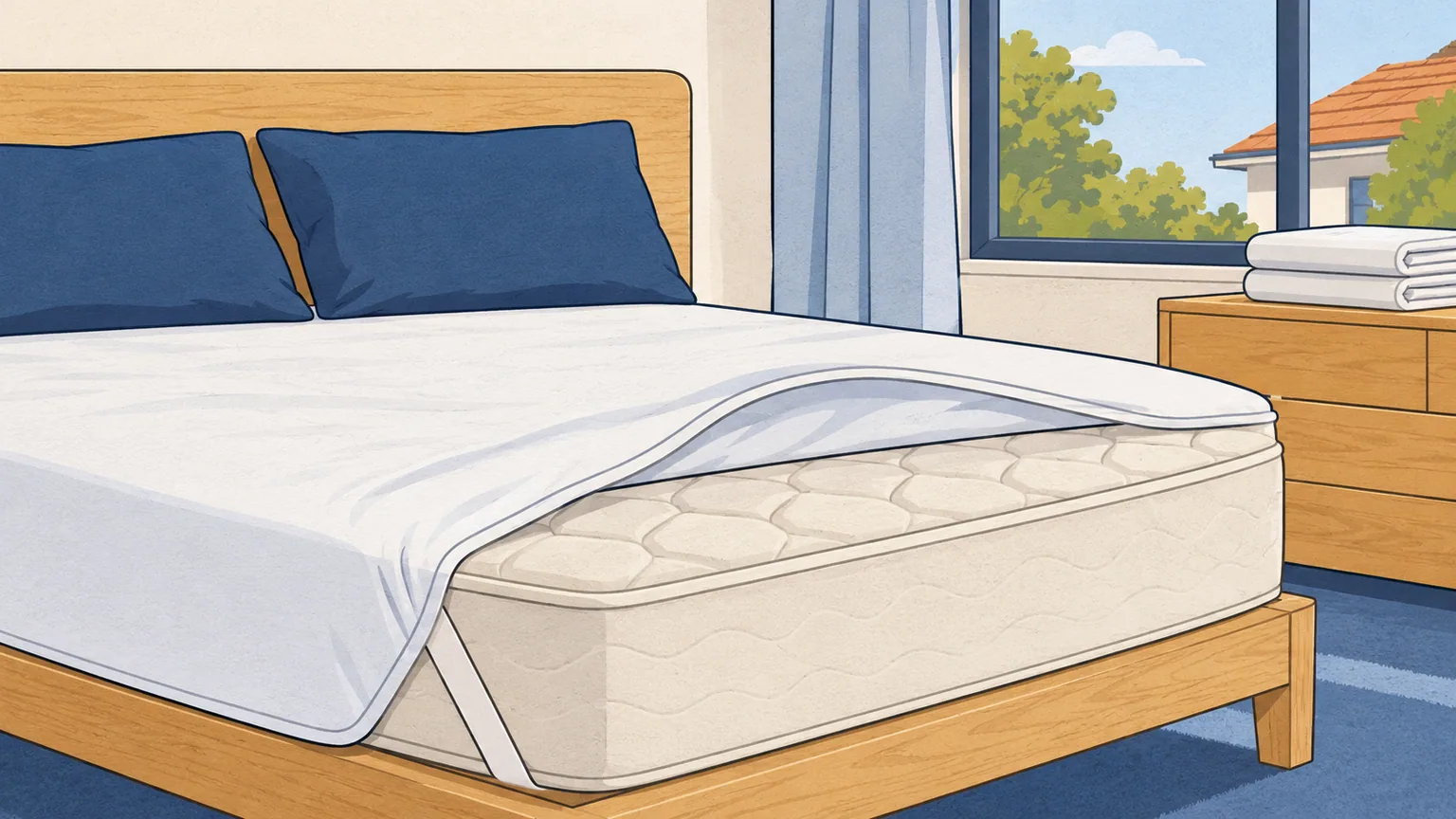
If you have a dust mite allergy, the Australasian Society of Clinical Immunology and Allergy (ASCIA) recommends covering the mattress, pillows and quilts with dust mite resistant covers, washed at least every two months. It also notes that dust mites cannot be completely removed from a home, only reduced.[6]
One exception is worth knowing. Ecosa says that to keep the cooling benefit of its CoolComfort mattress you should avoid a protector; its removable top cover "acts as a protector" and is machine washable.[10] Always check the maker's care notes first.
How to choose the right mattress protector
Protectors come in three broad styles. Match the style to what you want to keep out, then match the size and depth to your mattress.
Waterproof protectors
A fabric top over a thin waterproof layer, often polyurethane, stops liquid reaching the mattress. This is the style that guards against spills, accidents and night sweats, and the one Original Mattress Factory asks for.[5][7]
Quilted cotton protectors
Quilted and cotton protectors add softness and keep dirt and wear off the mattress. Unless a waterproof layer is named, do not count on one to stop a spill.
Fully encased protectors
An encased protector zips right around the mattress, covering every side. It is the style to look at when a mattress goes into storage or moves house.
Whichever you choose, check that its depth suits your mattress and that it comes in your bed size, and read the care label before you buy, because washing rules differ between styles.
How to fit a mattress protector and stop it sliding
A protector that is too tight pulls at its seams every time you move, and one that is too loose bunches under the sheet and creeps towards the corners. A good fit avoids both.
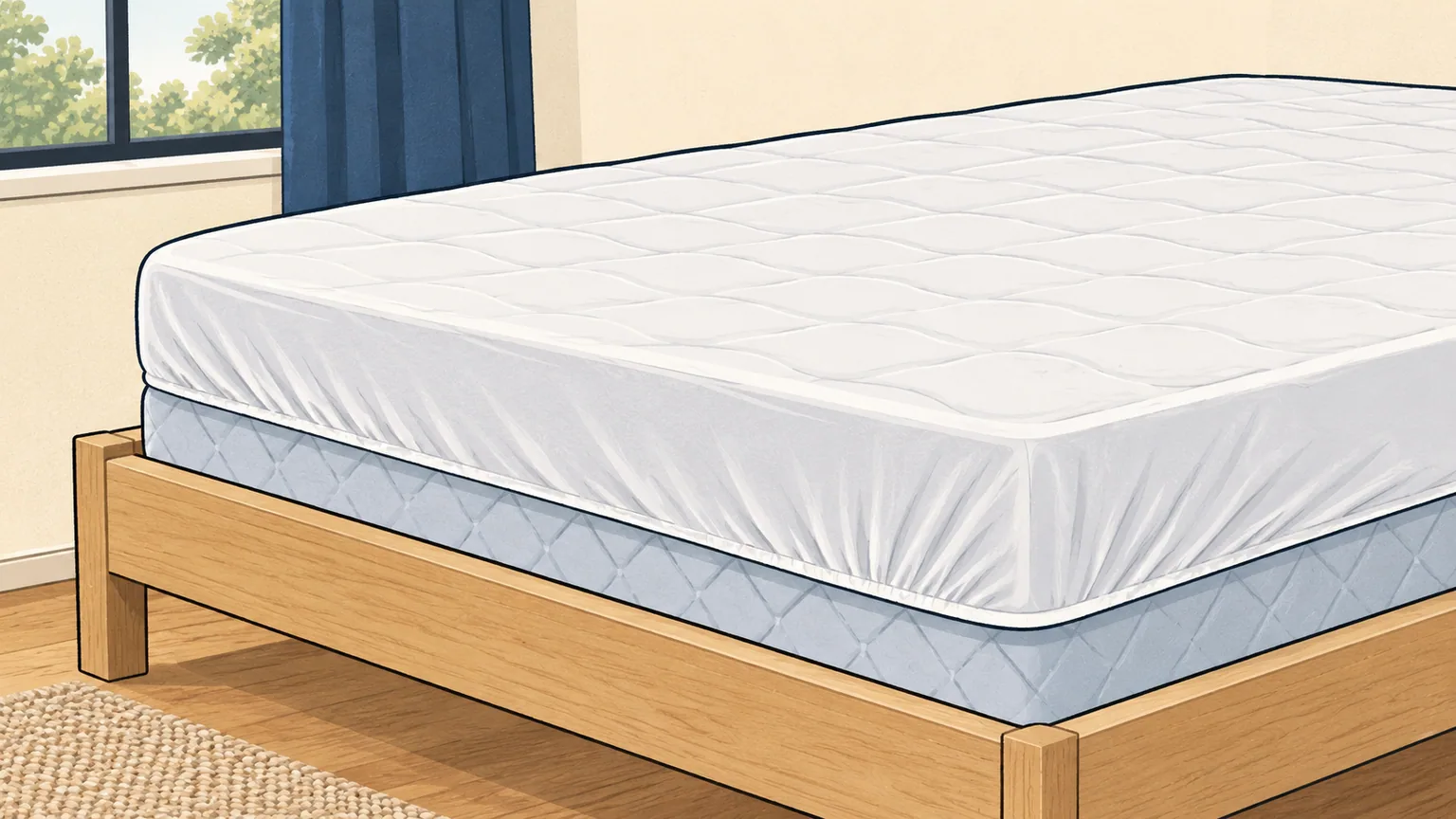
Square the mattress on its base, then lift each corner in turn and seat the elastic skirt underneath it, working around the bed rather than dragging the fabric across. For an encased style, fit the bottom first, pull the top over, then close the zip.
When a protector keeps sliding, the cause is usually one of these:
- a skirt too shallow for the mattress, so the elastic rests on the side instead of underneath
- a corner twisted during fitting, leaving the others to do all the work
- elastic that has worn out, which calls for a new protector rather than a repair
How to wash a mattress protector
The sewn-in care label on your protector comes first. Here is what two published care guides say, so you know what to look for.
Protect-A-Bed, for its waterproof protectors, says to wash at 60°C "to kill bacteria and dust mites", and to wash and tumble dry with other linen, because doing otherwise can blister the waterproof layer. It warns against solvents and bleach of any kind, which damage the polyurethane backing.[7]
For an encased protector it says to close the zip to about 30 cm before washing. It recommends drying on a medium setting with other linen, and says to stop using a protector whose backing has blistered from overheating, because the blisters split and the waterproofing is lost.[7]
For organic cotton and quilted protectors, the retailer Biome suggests a gentle or normal cycle at 20 to 40°C and no fabric softener, which coats the fibres and cuts absorbency.[8] If your protector has a waterproof backing, its label decides.
How to clean the mattress cover
A mattress cover is not a protector, and the 60°C advice above is not for it. Some makers let you unzip and wash the cover; others ask you to spot clean only. The chart shows how the mattresses we list split.
How the mattresses we list are cleaned
Emma says its covers are "Washable at max. 40°C" with no tumble drying and no bleach.[9] Ecosa says its CoolComfort top cover takes a cool wash up to 30°C, without bleach or fabric softener.[10] For the foam inside, and for mattresses without a washable cover, Ecosa says to spot clean with a damp cloth and mild soap, and not to machine wash.[4]
If your mattress is not on our list, its maker's product page or the label on the mattress has the same information.
Spills, stains and storage
What to do when something spills
Speed matters. Ecosa's care notes say to "Remove all liquid and food spills immediately", to spot clean with mild soap, and not to rub.[4] Press dry towels into the damp patch, keep air moving over it, and let the mattress dry completely before you remake the bed.
Drying matters because damp is what the warranties exclude: Ecosa does not cover mould of any kind, and Mlily excludes moisture ingress.[1][3]
Why mattresses get yellow stains
Sweat and body oils work through the sheets over the years and can leave yellow marks on the mattress fabric. A protector takes them instead and goes in the wash. If a mark has already formed, follow the maker's spot-cleaning advice rather than soaking the mattress.
Protecting a mattress in storage
Make sure the mattress is clean and completely dry, then cover it fully (an encased protector is made for this) and keep it somewhere dry. Damp is the risk the warranties name, so check on it during a long stay.[1][3]
Everyday habits that help a mattress last longer
A protector does the heavy lifting against spills and stains. Airing the bed, rotating the mattress as its maker suggests and checking the base do the rest, and our guide on how long a mattress lasts covers each of them.

Frequently asked questions
Does a stain void my mattress warranty?
A stain is not covered by the warranties we read. Ecosa and Origin exclude stains and liquid damage, and Mlily excludes a soiled mattress.[1][2][3] The rest of the warranty still covers the faults it names, such as a sag beyond the maker's limit. A protector keeps the stain off the mattress in the first place.
Is a mattress ruined if it gets wet?
Not necessarily, but act fast. Soak up the liquid at once, keep air moving over the patch and let the mattress dry completely. Lingering damp is the real risk: Ecosa's warranty excludes mould of any kind and Mlily's excludes moisture ingress.[1][3]
How often should I wash my mattress protector?
Follow its care label, and wash it after any spill or accident. For a dust mite allergy, ASCIA says dust mite resistant covers should be washed at least every two months, and sheets and pillowcases weekly in water hotter than 60°C.[6]
Can I wash a mattress cover at 60°C?
Only if its maker says so. Emma says its covers are washable at 40°C at most, and Ecosa's CoolComfort top cover up to 30°C.[9][10] The 60°C advice you may see is for some protectors, not for mattress covers.
Should I use a protector on a cooling mattress?
Check the maker first. Ecosa says to avoid a protector on its CoolComfort mattress to keep its cooling benefit, and says its washable top cover acts as the protector instead.[10]
What to do next
Once you know what a warranty covers, compare the warranties and trials of the mattresses we list.
Read next:
- How long a mattress lasts: the signs of wear, and when a sag counts as a fault.
- Australian mattress sizes compared and explained: get the size right for the protector too.
How we researched this
We do not test products. This guide was written from the pages below, read on the dates shown, and from the care, cover and trial terms on the makers' pages for the mattresses we list; the number after a sentence points to its source.
- Ecosa warranty page, 15-year and 10-year mattress warranties, read on 13 November 2026
- Origin FAQ, warranty answer, read on 13 November 2026
- Mlily warranty and care page, read on 13 November 2026
- Ecosa Essence Mattress product page, care notes, read on 5 November 2026
- Original Mattress Factory Mornington Plush product page, comfort exchange terms, read on 10 November 2026
- ASCIA, "Allergen minimisation" frequently asked questions, content updated April 2024, read on 13 November 2026
- Protect-A-Bed product care page, read on 13 November 2026
- Biome, "How to care for mattress protectors", 17 February 2026, read on 13 November 2026
- Emma Comfort Mattress product page, washing instructions, read on 4 November 2026
- Ecosa CoolComfort Mattress product page, care notes, read on 5 November 2026