
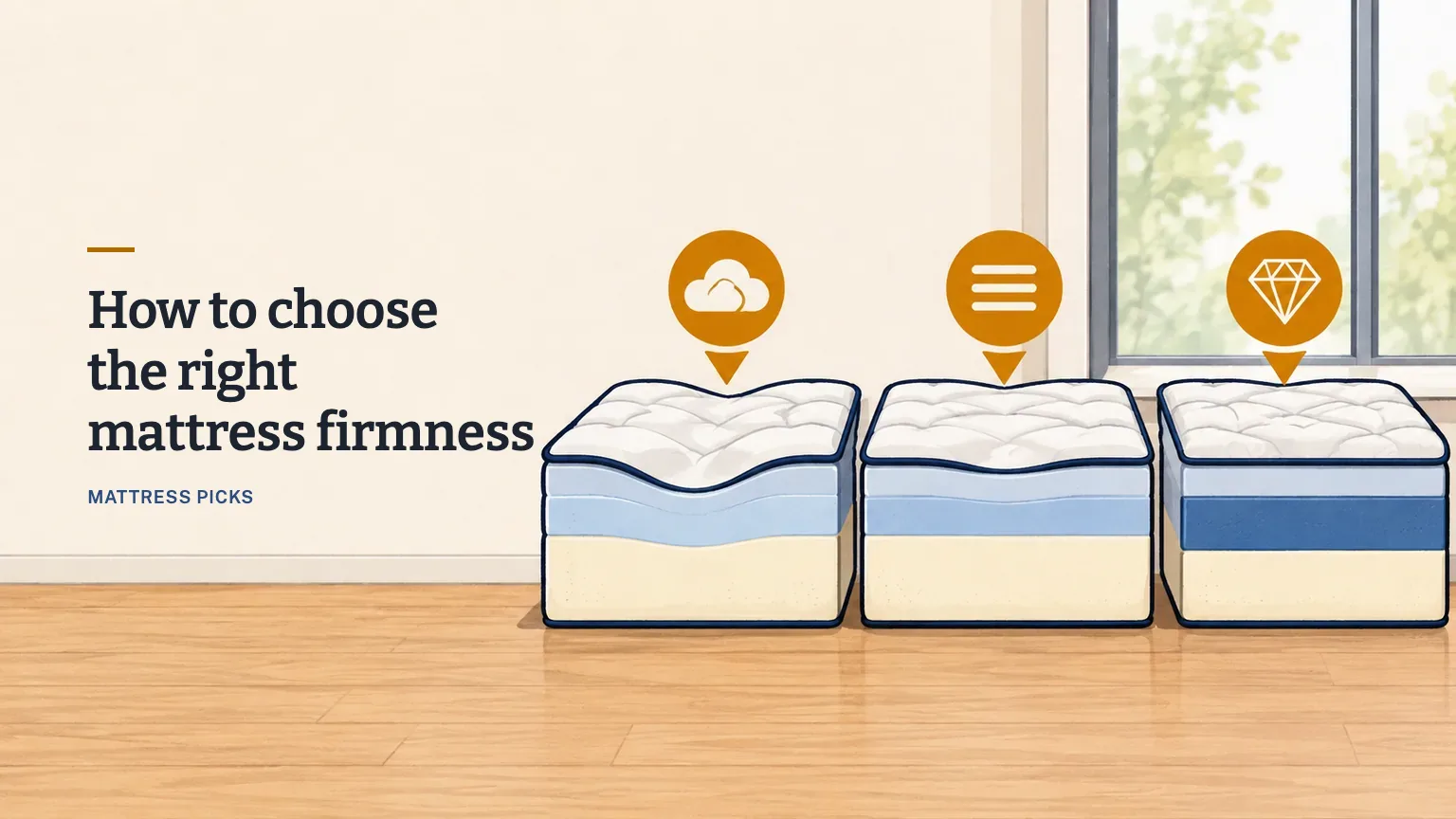
A 2021 review of 39 articles found that a medium-firm mattress promotes comfort, sleep quality and spinal alignment.[4] Your sleep position, your build and the materials inside the bed then nudge the answer softer or firmer. This guide explains how makers rate firmness, what suits the way you sleep, and which of the mattresses we list come in each feel.
Contents
- What mattress firmness actually means
- How makers rate firmness
- Which firmness suits the way you sleep
- Side sleepers need give at the shoulder
- Back sleepers need even support
- Stomach sleepers need a firm surface
- Combination sleepers should meet in the middle
- Why your body weight changes the feel
- The same rating can feel different in different materials
- Mattresses we list by feel
- Firmness mistakes that cost you a good night's sleep
- How to shop for firmness with confidence
- Frequently asked questions
- What level of mattress firmness is best for side sleepers?
- Is a 7 out of 10 mattress firm or soft?
- How can I tell if my mattress is too soft or too firm?
- Is a firmer mattress better for back pain?
- My partner and I prefer different firmness. What should we do?
- What to do next
- How we researched this
What mattress firmness actually means
Firmness is how the surface feels when you lie down: how far you sink and how quickly the layers push back. Support is different: it is how well the core holds your spine in line all night.
A mattress can feel plush on top and still support well, because a soft comfort layer can sit over a firm core. A firmness label describes that first impression, not the whole story.
Pressure relief sits in between. A surface that cushions the shoulder and hip eases the joints, while one that holds you high on the layers can leave them aching.
How makers rate firmness
We read how each maker describes the firmness of the mattresses we list. The chart shows the result: the same few words, used by each maker in its own way.
How makers describe the firmness of the mattresses we list
Few makers give a number at all. Emma rates its Luxe Pro at 7.7 on a scale from 1 (firm) to 10 (soft), so on Emma's scale a higher number means softer.[1] Emma rates its Comfort Protect at 6.7 without saying which way its scale runs, and Origin calls its LumbarCloud 6.5 out of 10, medium-plush.[2][3]
So treat every rating as a guide within the brand that set it, never as a universal measure. Compare a maker's own range, and read the construction as closely as the label.
Which firmness suits the way you sleep
Your sleep position decides where your weight presses down, so make it the first filter, ahead of brand or price. The advice below is a general starting point, not a rule.

Side sleepers need give at the shoulder
On your side, the shoulder and hip carry the load and need to sink in for the spine to stay straight. A medium-soft to medium feel usually suits, and memory foam or hybrid comfort layers that contour closely help.
Back sleepers need even support
On your back, weight spreads more evenly, and the aim is to keep the hips in line with the shoulders. A medium-firm feel usually suits: too soft and the hips sink, too hard and pressure gathers at the tailbone.
Stomach sleepers need a firm surface
On your front, the heaviest part of the body is the middle, and it pulls down into the mattress. A firmer surface keeps the hips from sinking and the lower back from arching.
Combination sleepers should meet in the middle
If you change position through the night, look for versatility. A medium feel is the usual compromise, and responsive materials such as latex and pocket springs make moving easier.
Why your body weight changes the feel
A lighter body rests on top of the comfort layers, so a mattress can feel firmer than its label. A heavier body sinks deeper, so a medium can behave like a soft and let the hips drop.
When partners differ in build, a medium feel, a mattress with a different feel on each side, or two single mattresses side by side can keep both comfortable. A topper is a lighter fix for one side.
The same rating can feel different in different materials
Two mattresses with the same label can feel nothing alike, because the materials behave differently. Memory foam moulds to the body and tends to feel softer as it warms.
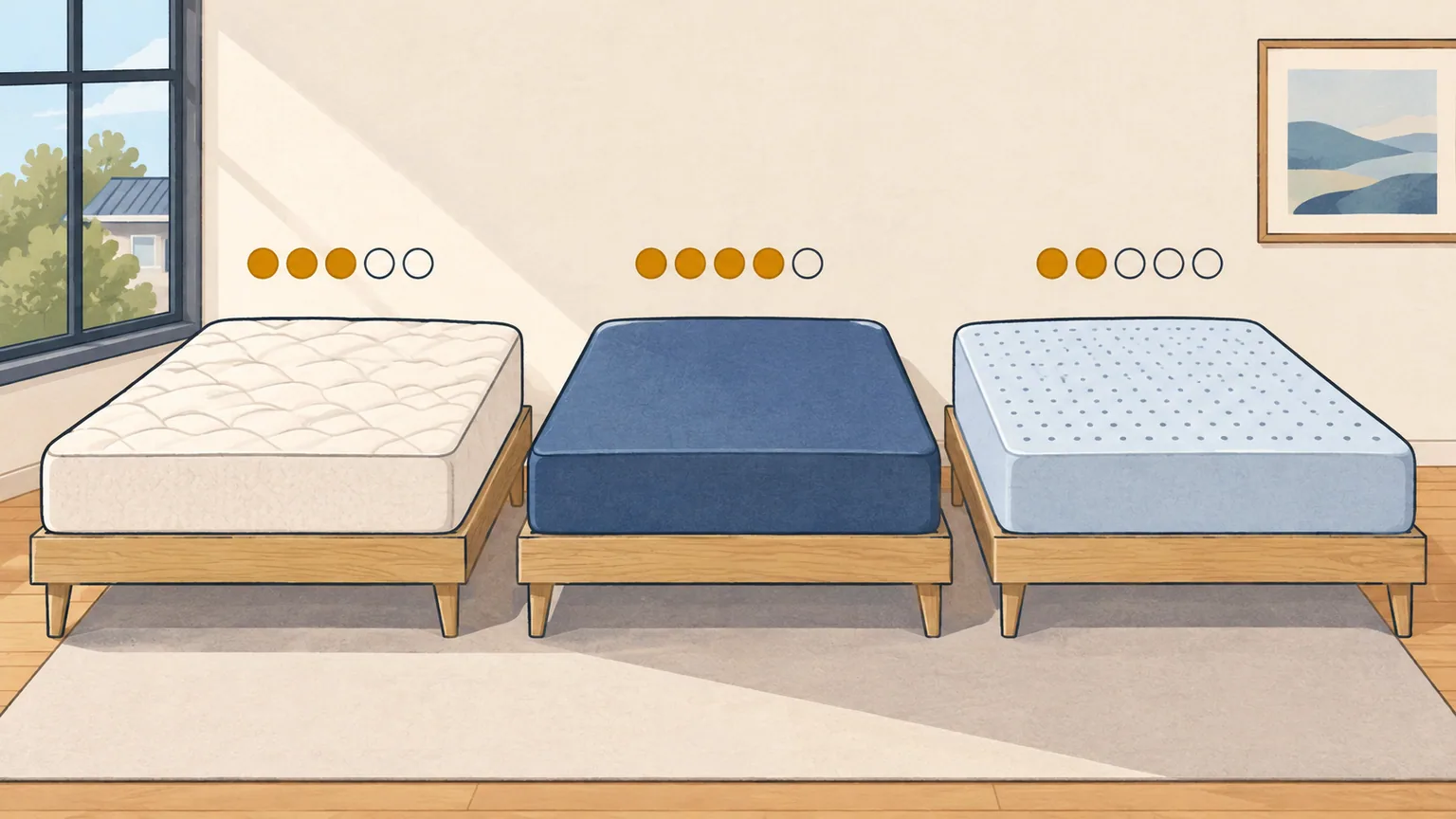
Latex pushes back quickly and tends to feel firmer. Pocket springs and hybrids pair a springy core with foam on top, so they feel supportive underneath and gentler on the surface. A pillow top adds softness without changing the core.
Mattresses we list by feel
Once you know the feel you want, these lists hold the mattresses whose maker describes them that way. Each count links to the list.
| Feel | Models we list |
|---|---|
| Plush | 11 models |
| Medium | 11 models |
| Firm | 11 models |
| Adjustable firmness | 3 models |
A list follows the maker's own words, so read each model's construction too. A mattress sold in several feels can appear in more than one list.
Firmness mistakes that cost you a good night's sleep
These are the traps worth avoiding when you choose a feel.
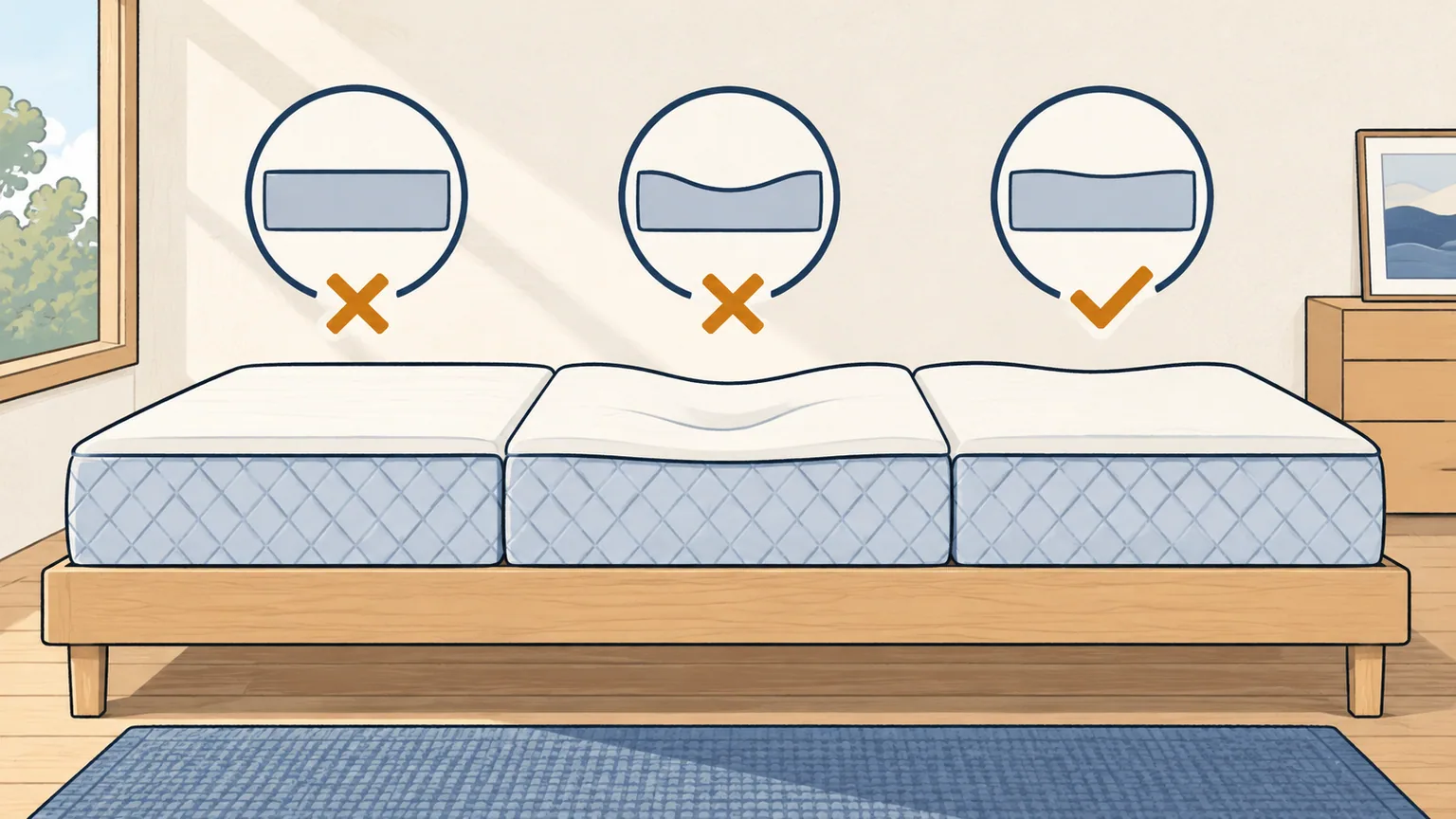
- Believing firmer is always better. Too firm builds pressure at the hips and shoulders; too soft lets the hips sink.
- Comparing labels across brands. Each maker sets its own scale, and Emma's even runs the other way.[1]
- Judging from a quick lie-down. A few minutes in a showroom cannot reproduce a full night.
- Forgetting the base. Slats, a platform or an ensemble each change how the same mattress feels.
- Forgetting the pillow. How far your shoulder sinks sets the pillow height your neck needs.
How to shop for firmness with confidence
Because labels differ, the in-home trial is your safety net. The chart shows the trials the mattresses we list offer, from their makers' own pages.
In-home trials of the mattresses we list
Work through it in order:
- Settle your main sleep position and your build, then choose a band of firmness rather than one rating.
- Read how each brand words its range before comparing across brands.
- Look at the construction, not just the label: a plush top over a firm core can suit partners who disagree.
- Check the trial length, whether it is a refund or only an exchange, and who pays to send it back.
That is how we build our lists: we read each maker's published firmness, construction and trial terms, so you can shortlist and then confirm the feel at home.
Frequently asked questions
What level of mattress firmness is best for side sleepers?
Usually medium-soft to medium, so the shoulder and hip can sink enough to keep the spine straight. Memory foam and hybrid comfort layers that contour closely tend to suit.
Is a 7 out of 10 mattress firm or soft?
It depends on the maker. Emma rates firmness from 1 (firm) to 10 (soft), so its 7.7 Luxe Pro is on the soft side.[1] Always check which way a maker's scale runs before comparing numbers.
How can I tell if my mattress is too soft or too firm?
Too firm tends to leave pressure at the hips and shoulders or numb arms. Too soft lets the hips drop and can leave a stiff lower back. Stiffness in the same place most mornings is the signal to look again.
Is a firmer mattress better for back pain?
Not automatically. About 8 in 10 people will have low back pain without a particular cause at some time in their life.[5] A 2021 review of 39 articles found that a medium-firm mattress promotes comfort, sleep quality and spinal alignment, but noted that studies disagree on which mattress prevents back pain.[4] For pain that persists, see a health professional.
My partner and I prefer different firmness. What should we do?
Meet in the middle with a medium feel, or choose a mattress with a different feel on each side, or two singles side by side in one frame. Keeping each spine level matters more than a matching label.
What to do next
Once you know the feel you want, compare the models that offer it.
Read next:
- Australian mattress sizes compared and explained: the other first decision.
- Which mattress to buy: six short steps from size to price.
How we researched this
We do not test products. This guide was written from the pages below, read on the dates shown, and from the firmness and trial terms on the makers' pages for the mattresses we list; the number after a sentence points to its source.
- Emma Luxe Pro Mattress product page, read on 9 November 2026
- Emma Comfort Protect Mattress product page, read on 10 November 2026
- Origin LumbarCloud Mattress product page, read on 10 November 2026
- Caggiari and others, "What type of mattress should be chosen to avoid back pain and improve sleep quality? Review of the literature", Journal of Orthopaedics and Traumatology, 2021, read on 13 November 2026
- Healthdirect: lower back pain, read on 13 November 2026